
What is the average marketing salary in the UK?
Whether you’re a marketer weighing up your options or a hiring manager trying to attract top talent, you’re in the right place.
We’ve pulled together everything you need to know about salaries, regional differences, flexible working, and the benefits companies are offering across the UK. This is real insight based on the last 12 months of hiring (and a lot of real conversations).
Here are the sections I cover are (click the area of interest to jump to it!):
What’s happening in the market right now?
Salaries in marketing have only seen a modest growth of 1.7% in the last year. This is much below the UK average of 2.4%.
What’s even more telling is that a whopping 54% of marketers feel their pay hasn’t kept up with increased responsibilities!
So, there’s no surprise that there are a lot of marketers right now on the market for a new role.
UK Marketing Salaries
Here’s what I found from reviewing full-time, permanent Marketing roles across the UK:
Some of these ranges are pretty big but that’s because of the slight salary disparity between London salaries and the rest of the UK. Also, lower-level roles are often people taking their first step into marketing post 16, potentially via an apprenticeship, which explains the lower numbers.
*Please bear in mind that anyone over the age of 21 working a 40-hour week should be paid £25,400*
| Role | UK Average Base Salary (£) |
| Marketing Assistant | £22,000 – £30,000 (median ~£28,900) |
| Marketing Executive | £27,000 – £40,000 (median ~£35,000) |
| Marketing Manager | £40,000 – £60,000 (median ~£56,900) |
| Senior Marketing Manager | £55,000 – £70,000 (median ~£61,300) |
| Marketing Director | £75,000 – £120,000 (median ~£109,500) |
| Chief Marketing Officer | £100,000 – £150,000 (median ~£122,700) |
While the average salary ranges give a good general picture, most marketing roles still fall into that Executive to Manager bracket… and the lines between them are often VERY blurred.
Titles can be so misleading in marketing. For example, we’ve seen Marketing Coordinators earning £38,000 while carrying out the responsibilities of a Senior Executive or even a standalone Marketing Manager. So, the job title is almost redundant compared to what they actually do.
A lot depends on the company’s setup (team size, marketing budget, use of agencies, and training offered). There are so many factors involved, and these variables make it difficult for marketers to benchmark their value. Too often, they end up doing more for less.
Average Marketing Salaries by Region
From what I’m seeing on the market, regional salary differences aren’t too noticeable.
Since COVID, there isn’t a massive difference in North vs. Midlands vs. South salaries.
I’m sure it won’t surprise you that London and the South East offer higher marketing salaries in comparison to the North and Midlands due to cost of living/travel costs. However, salaries are only really £5-7k more in the capital, nothing crazy.
A recent report found that, on average, marketing professionals in London earn roughly 20% higher than the national average, whereas those in the North East (the lowest-paying region) earn about 15–20% below the national average.
Work Style Trends: Hybrid, Remote, On-Site
Hybrid working is now the norm for marketing roles. And to be honest, it’s not going anywhere. Now more than ever, flexibility is essential for talent attraction and retention in the marketing world.
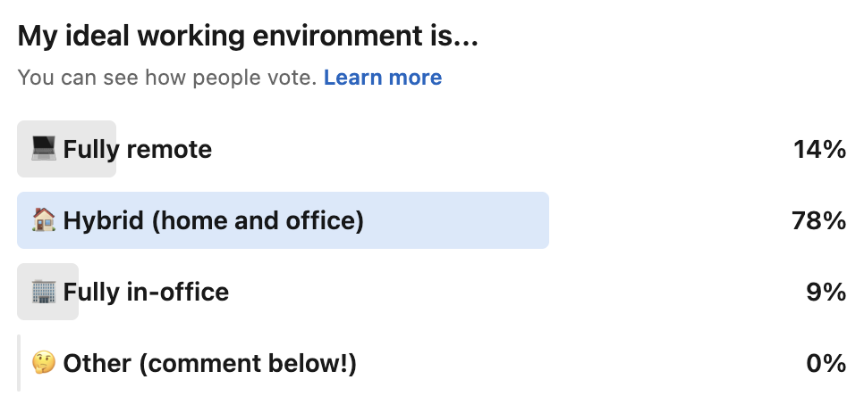
According to a recent poll we rolled out on LinkedIn:
- 78% of marketers want hybrid
- 14% want fully remote
- Only 9% want to be in the office full time
And it’s not just a nice-to-have for these professionals, workplace arrangements really impact their job satisfaction. In fact, satisfaction is lowest for “5 days in office” (score 2.37/5) and highest for “work anywhere” (4.27/5).
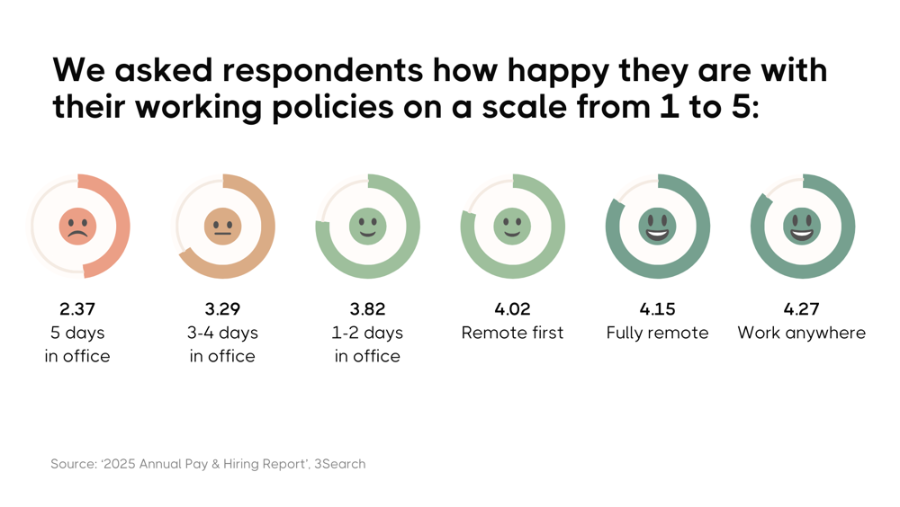
From that, and what we’re hearing daily from the talent we speak to: if you’re not offering hybrid, you’re going to struggle to hire. Especially for mid- to senior-level roles.
From our analysis of marketing jobs across the UK:
- 72% of marketing roles are hybrid (typically 2–3 office days)
- 14.7% are fully remote
- 12.9% are fully office-based
Remote work is slightly more prevalent in regions with talent shortages or longer commutes.
London based businesses widely embraced hybrid models (to attract talent and cope with commuting constraints). In contrast, some smaller companies in regions like the East Midlands or North East have been somewhat more office oriented. But even there, hybrid is common.
And although fully office-based roles make up the smallest proportion of jobs in the market, it’s still 13%.
Most jobs making up this percentage are likely more junior roles. This is due to lack of trust, wanting to support/train in-person, or just simply because that is how things have always been done. But some more senior roles are wanting majority office-based marketers, and several businesses we’ve spoken to recently said that they are only really willing to give marketing managers 1-day WFH.
So, we asked what’s the furthest marketing professionals would commute to the office:
- Under 15 mins – 24%
- 15–30 mins – 39%
- Over 30 mins – 22%
- No commute is short enough – 14%
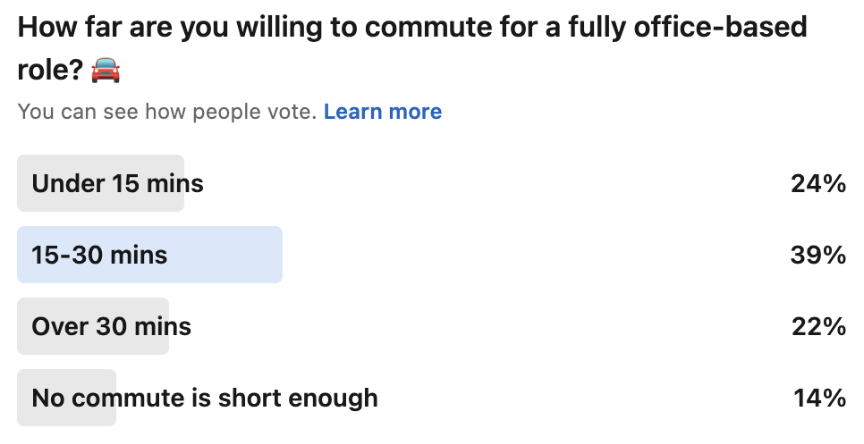
Evidently, marketing professionals DO NOT want to be in the office full time, so the clear trend is that hybrid is here to stay; and roles advertising flexible or remote-first options have a hiring advantage. Advice to employers: Don’t underestimate how important flexibility is to marketers.
Other factors
Creative vs. Data-Driven Marketing Roles
Modern marketing teams seek a balance of creative and data skills, and both role types are in demand. However, there are differences in how each is valued and compensated:
- Creative Roles (Content, Branding): ~15–20% of demand. Renewed emphasis due to digital privacy and algorithm changes.
- Data-Driven Roles (SEO, Analytics): ~15–20% of demand. Growing rapidly due to increased reliance on data insights.
- Hybrid Roles (Blended Skills): ~39% of demand. Highly sought after; employers value marketers who combine both creative and analytical capabilities.
Data roles tend to pay slightly higher due to technical skills, but senior creatives in B2C brands also command strong salaries.
B2B vs. B2C Marketing Salaries and Differences
Generally, B2B pays more (about 19% higher), especially in sectors like tech, finance, and manufacturing.
That said, big B2C names (especially in FMCG and automotive) offer creative freedom, fast-paced environments, and strong salary bands.
But in both cases, the sector itself is often more important than whether it’s B2B or B2C.
Common Benefits Offered
Companies are using benefits to stand out – and in a talent-short market, it matters.
| Benefit | Prevalence (%) | Typical Details |
| Performance Bonuses | 50% | Typically 5–15% of base salary |
| Enhanced Holiday | 30% | Usually 25–30 days, often with purchase scheme, some offer extra day off for birthday, volunteer days etc. |
| Pension Contributions | 50% | Employer contributions usually 5–10% |
| Healthcare Benefits | 35% | Private medical insurance or health cash plans |
| Life Insurance | 25% | Typically 4x annual salary coverage |
| Training & Development | 20% | Professional courses and certifications |
These benefits have become an important part of the offer. In a tight talent market, companies are using benefits to differentiate. And a good benefits package is a good way to tempt passive talent who are not actively job searching
Summary
Flexibility is key. Hybrid is now the standard, but full remote isn’t guaranteed! Candidates, if you want the employer to be flexible, you also need to be. It’s a 2-way street.
Total package matters. Salary is important, but benefits, flexibility, and development are all part of the decision.
Market awareness is essential. If you’re hiring, align your expectations with the reality of the market.
Advice for hiring managers:
- Be realistic about what one person can do
- Offer hybrid as standard unless you really don’t need to
- Salary and flexibility still matter more than free snacks (sorry!)
Advice for marketers looking for a new role:
- Know your worth AND back this up with results
- Don’t expect every role to be remote
- Highlight digital skills, data fluency, and creativity in your CV and interviews
Need help hiring or thinking about your next move in marketing?
Give the office a call and we’ll see how we can help – 01509 323532.