
Preparing for lift engineer interview can differ from general engineering interviews. This guide shows you what to expect, what to bring, and how to answer with confidence.
You can skip ahead to your area of interest:
- How Lift Engineering Interviews Work
- Must-Have Qualifications & Proof
- Preparation for Lift Engineer Interview
- Common Lift Engineer Interview Questions (with example answers)
- Skills to show off
- After the Lift Engineer Interview
- Perks of working with a Recruiter
How Lift Engineer Interviews Work
The typical structure of a lift engineering interview process is:
Stage 1: Short phone interview. Expect high-level lift engineer interview questions on products, duties, and safety.
Stage 2: On-site or video interview. More depth on fault finding, installation, and compliance.
(Third stage is rare. It happens when the hiring manager wants extra assurance.)
Sometimes companies offer straight after a phone interview! It doesn’t happen all the time, but I’d say it’s more common for service roles. To help trigger a fast offer like this:
- Make it clear if you have a strong history with specific brands.
- Have a digital copy of your NVQ3 and EOR202 ready to send over.
- Highlight your skillset with clear and detailed examples.
When it comes to technical tests, they won’t happen in every interview you have, I’d say roughly 25% of lift engineering interviews include a test.
Expect short, practical tasks rather than long exams, focusing on diagnostics, wiring diagrams, commissioning steps, or safety scenarios.
Must-Have Qualifications for a Lift Engineer Interview
NVQ3: why it matters and how to present it
- NVQ3 in Lift Engineering is the industry norm.
- Bring the certificate or a digital copy.
- Note any units that align with the role (service, install, modernisation).
EOR202 / EOR202N basic lift safety
- Most employers expect EOR202 minimum to work on lifts.
- Be ready for lift engineer interview questions on hazard spotting, isolation, RAMS, and permits.
Driving licence expectations
- A full licence is standard.
- London roles may have walking routes. Confirm this if you don’t drive.
Checklist of what to bring
- NVQ3 certificate.
- EOR202/EOR202N pass.
- Any brand/product training (Otis/Orona/etc.).
- CSCS/ECS if applicable.
- Photos/logbook entries of work you can discuss.
Preparation for Lift Engineer Interview
Research the company and tailor your examples
- Products, routes (service vs install), sectors served.
- Align your stories to their kit and client base.
Dress code
- If you have time, dress smart.
- If you’re coming from a job, clean workwear is acceptable.
- Bring your certificates regardless.
Do’s
- Be honest about what you can and can’t do.
- Highlight key skills with examples.
- Share your reason for leaving.
- Ask questions.
- Bring NVQ3/EOR202 and training records.
Don’ts
- Bad-mouth employers.
- Bring up salary first.
- Let the interviewer lead or your recruiter can discuss this on your behalf if it doesn’t come up in the interview.
Common Lift Engineer Interview Questions (with example answers)
Use clear, STAR answers (Situation, Task, Action, Result). Keep brand names and models in mind. Tailor to the role and company you are interviewing at.
Lift service engineer interview questions
Q: Walk me through a recent breakdown you fixed first-time.
A: “Supermarket site. Car stopped between floors. I isolated and made safe. Checked controller fault code, traced to door lock circuit. Re-seated a loose connector, tested door protection, ran a full cycle. Logged actions and updated the site contact.”
Q: What brands and controllers have you worked on?
A: “Mainly Orona and Otis. Comfortable with microprocessor controllers. Confident reading wiring diagrams. I keep notes on parameter changes and reset procedures.”
Q: How do you prioritise callouts?
A: “Risk first. Entrapments, hospitals, care homes. Then SLA and location. I call ahead, set expectations, and update after the fix.”
Lift installation engineer interview questions
Q: How do you plan a lift installation from handover to commissioning?
A: “Start with site readiness and RAMS. Check pit and headroom. Verify power and structural openings. Install guide rails, car frame, ropes, safety gear, and wiring looms to drawings. Commission with full test plan, then handover with O&M and client training.”
Q: Show me how you read this schematic.
A: “I find the power path first. Then control circuits. I trace safety chain devices: door locks, limit switches, overspeed governor, safety gear. I confirm interlocks and run a safe test routine.”
Q: What would you do if commissioning shows intermittent door faults?
A: “Check door operator alignment and track wear. Inspect harness connections. Review error logs. Test sensors. Adjust closing force within spec. Document all changes.”
Safety & compliance questions
Q: How do you ensure LOLER compliance?
A: “Maintain records, complete thorough examinations as required, and escalate defects. Always lock-off and verify zero energy before work.”
Q: Tell me about working at height.
A: “Assess anchorage, use the right PPE, maintain three points of contact, and follow the rescue plan.”
Behavioural and situational
Q: Why are you leaving your current employer?
A: “Progression and product exposure. I’m positive about my current team.”
Q: How do you handle working alone?
A: “Clear comms plan. Check-ins. Escalation protocols. I log tasks and share updates.”
✅ Tip: Keep answers short but detailed, specific, and safety-led.
Skills to show off
The hiring manager will be looking out for certain skills. Here are some you should show off in your lift engineer interview…
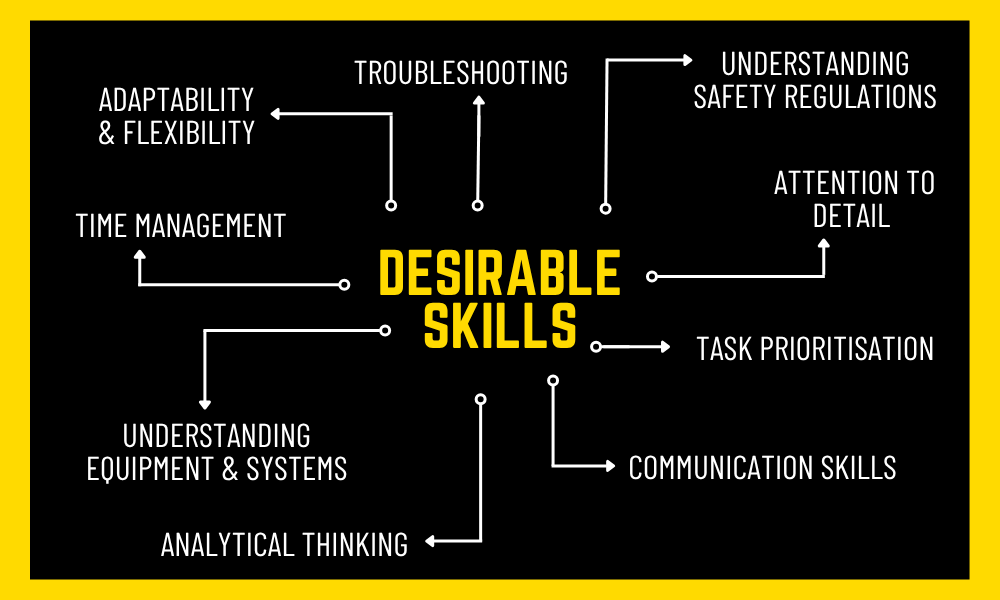
STAR examples that highlight fault-finding and risk control
- Pick two service fixes and one installation challenge.
- Name the brand/product and the controller or component.
- End each story with a measurable result (uptime, first-time fix, snag-free handover).
Evidence to mention
- Test instruments used and why.
- Isolation steps taken.
- RAMS you created or improved.
- Permit systems you’ve followed.
After the Lift Engineer Interview
When the interview feels like it’s coming to a close. Make sure you’ve got across what you had prepared.
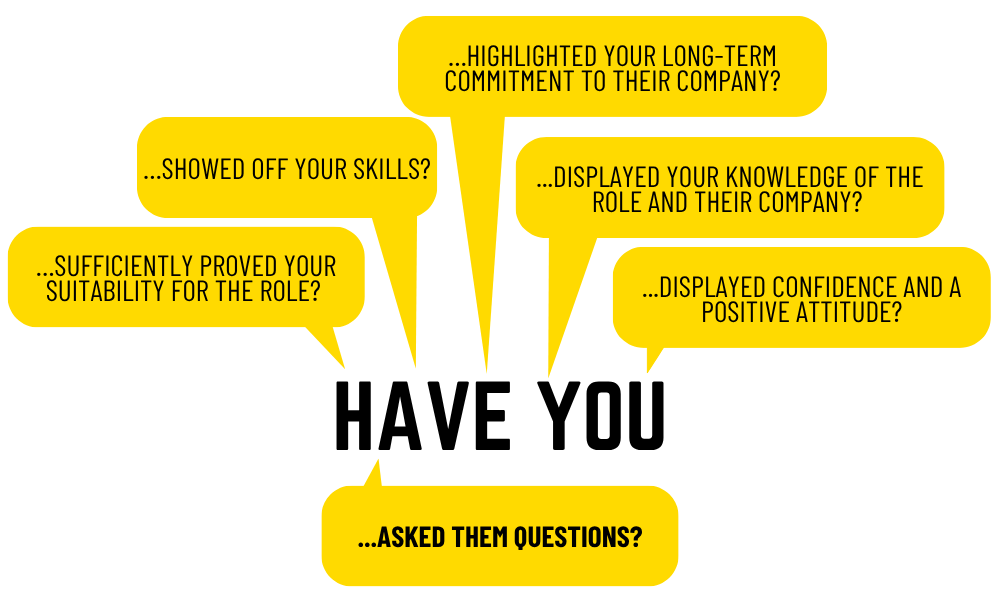
You could finish off your interview by asking some closing questions like:
- What else do you want to know from me?
- Is there anything else I can further prove to you to show my suitability for the role?
This will show that inquisitive element which I know engineering managers like.
Interviews are a two way street, they’re not only for the client but for you to learn as much as you can about the business, team and management.
Spot the green flags and clock the red ones. Then follow up like a pro to keep momentum:
Green flags
- Quick, structured feedback.
- Clear discussion of your strengths and gaps.
- Paperwork follows fast after verbal offer.
Red flags
- Super-short interviews with no depth.
- Interviewers bad-mouthing ex-staff or competitors.
Follow-up etiquette
- Call your recruiter the same day.
- Share what was asked, what you said, and any concerns.
- Your recruiter will chase feedback and handle salary conversations.
Perks of working with a recruiter
- Sharper prep | Insider context on the role, team and stakeholders.
- Interview logistics handled | We align diaries, prep for Teams and F2F, and reduce stages where possible.
- Real‑time feedback | We gather specifics after each stage so you can adjust fast.
- Negotiation done for you | Salary, benefits, start dates and awkward bits handled by us.
- Market intel | Benchmarks on pay, shifts, and what similar firms are offering right now.
- Access to hidden roles | You’ll hear about briefs before they hit job boards.
Next Steps
Now you’ve mastered the art of interviewing, it’s time to get some lined up.
Or you can get in touch with me:

Ravin Sanghera
ravin@stirlingwarrington.co.uk
07949 074 423