
The world of work is constantly changing. What once counted as a perk is now expected. With hybrid working, mental wellbeing, and personal priorities reshaping what candidates want, we asked our LinkedIn network of over 16,000 professionals one simple question about employee benefits:
“Which benefit is most important to you?”
Here’s how they voted:
🥇 Flexible working – 60%
🥈 Extra holiday – 20%
🥉 Private health insurance – 15%
Flexibility is clearly no longer a nice-to-have. It’s a dealbreaker.
Why Flexible Working Tops the List
Flexible working has become a crucial employee benefit in 2025. From hybrid setups to compressed hours and remote-first roles, candidates want to know they’ll have control over their time.
This actually echoes national trends:
- 4 in 5 workers would choose flexibility over a pay rise
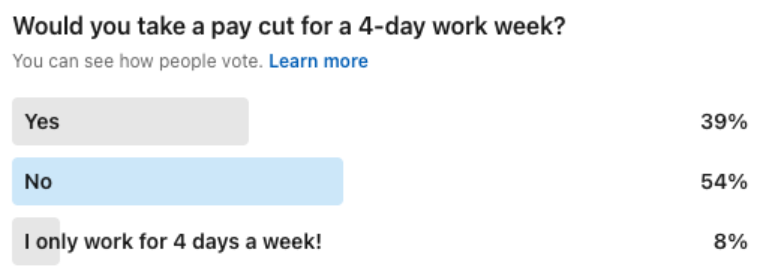
We actually did a poll related to this and 39% of people said they’d voluntarily take a pay cut to get a 4 day week! And 8% said they already do (which is more than expected)
- Since 2024, UK employees now have the legal right to request flexible working from day one
- Flexibility is essential for parents, carers, and those managing mental health
Extra Holiday
Additional annual leave remains a high-impact benefit. In many cases, it’s another tangible sign that a company values work-life balance (linking to the demand for flexibility).
We’ve seen employers offering:
- Your birthday off
- Buy/sell holiday schemes
- Mental health/wellbeing time
- Long-service extra leave
One thing that we do not expect to see in this section is “Maternity leave”!!!
So, we asked our network:
“Do you agree that maternity leave is a benefit?”
They voted:
❌ 69% said “absolutely not”
✅ 31% said yes… which was a shock
But when we went to the comments, 1 person highlighted that it “is 100% a benefit” when it goes beyond statutory pay.
This shows that enhanced parental leave policies can tip the balance for someone planning a family, even if it’s not top of mind for everyone.
Private Healthcare
While not as universally desired as flexibility, private medical cover still makes a big difference to candidate perception, especially in mid-senior roles.
We’ve seen some businesses stand out by offering:
- Full private medical insurance through providers like Bupa
- Health cash plans for dental, optical, and physiotherapy
- Employee Assistance Programmes (EAPs)
- Mental health support including counselling and app subscriptions
While it’s not as universally expected as flexibility, private healthcare is increasingly seen as a sign of a premium employer, especially when it’s offered from day one or extended to family members.
Is Benefits becoming more crucial than salary?
Your employee benefits package can make or break your hiring strategy but it’s only part of the equation. Salary still comes out on top for candidates and a couple of our LinkedIn polls demonstrate this.
“What puts you off applying for a job?”
70% said unclear salary
Just 6% said poor benefits
15% said lack of flexibility
“What’s the first thing you look for in a job ad?”
65%: Clear salary
Only 5% mentioned benefits/perks
When Maintenance Engineers were asked what mattered more:
75% said salary
25% said benefits
What This Means for Employers
If you’re hiring or reviewing your employee benefits, here’s what jobseekers expect to see in 2025:
Clarity – Don’t list “great benefits”; go into detail.
Flexibility – highlight if you’re lenient about hours, it’s a huge selling point.
Real Perks – Go beyond fruit and socials.
Customisation – One size doesn’t fit all.
Most importantly though, don’t hide your salary. Even the best employee benefits package can’t make up for ambiguity.
If you’re not sure how your benefits stack up, we can help. From salary benchmarking to employer brand advice, we partner with businesses to attract the right people with the right package.
Get in touch or download our benefits checklist to stay competitive in 2025.